
This is a draf. Almost done. Check back in a few days.
I just read the piece "The Colonization of Confidence", a short story by Robert Kingett about the homogenizing effect of relying on technology for "cheap, fast, and easy" artistic expression, and it reminded me of a few things. What's interesting is that there is a strong parallel here to things that have happened before.
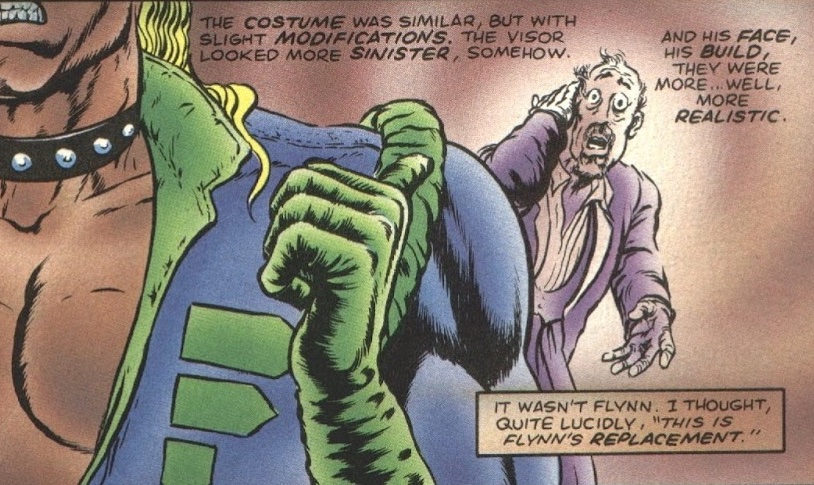

The second is the work of someone you may not have heard of, anticonsumerist activist Rev. Billy (Wikipedia entry) of the Church of Stop Shopping. Billy's whole crusade—which I encourage you to check out for yourself, as I am a very poor messenger for his ideas—is that corporations like Starbucks and Disney are in the literal business of eradicating the messiness of local culture so they can replace it with a mass-produced, marketing-created, and focus-tested pseudo-culture "product" they can sell more easily and with lower friction.
One memory that stands out for me, a few years after I met Rev. Billy, is watching a TV show, produced by ABC, a subsidiary of Disney, in which the theme is that classic fairy tales characters come to life... and, tellingly, alongside Snow White and Little Red Riding Hood, one of what they simply referred to as "fairy tales" was Disney's private intellectual property, Jiminy Cricket.
On reflection, what Rev. Billy has argued Starbucks and Disney are doing is not that different from what some friends of mine say Facebook, Xitter, etc. are doing: looking out on the endless diversity of a culture built by individuals, whether that's in the form of thousands of local folktales, thousands of different mom 'n' pop coffee shops, or thousands of different websites, and saying, "We've got to convince all those people to come rely on us to provide readymade experiences, offer them convenience and predictability, so they come adopt our prefabricated physical or mental venue instead of building their own. Then we can monetize them."
The role of technology vs. the role of the artist
As an afterthought, it's probably worth adding at this point that with regard to creativity in particular, I don't think generative AI tools, the specific adversary in "The Colonization of Confidence", necessarily must have a homogenizing effect on artistic expression. I think the more successful of my generative illustrations (see note) for the most part show that there's a difference between a "tool" (or, arguably, "medium") and a "crutch". A lot of people rely on AI in particular as a crutch.
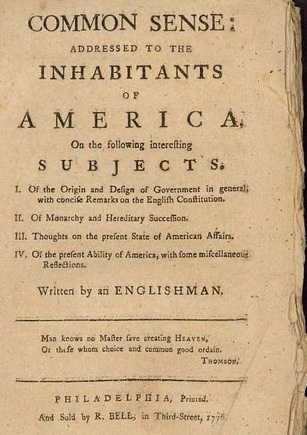
The people who were already able produce high quality content suddenly had a way to more easily distribute it, and in higher visual quality than previously—but the ease of mechanical production didn't increase the number of those people or their ideas. I bet that the content of most of those pamphlets weren't any more worth reading than they would have been without the printing press. There was just suddenly a lot more of them, and by comparison, I'm willing to bet people felt like average quality of writing had gone down—because the ratio of "writing that people put out" to "good writing" would have suddenly dropped precipitously. It made things cheaper (in terms of effort or actual expense), not better. I think we're seeing something like that now.

Much later on, laser printers gave everybody access to even more beautiful mechanical text. I wonder how the art of calligraphy has been doing since then.
So, I see both sides.
Final Thought: We've Even Been Here Even Before We Were Here Before
One last thought struck me, after I was done writing this. There's another analogue, in the world of music. As the sonic experimentalism that bled into popular music in the 1960s, the painstaking handiwork of tape editors and electronic engineers, presaged the commercial synthesizer, which suddenly enabled a whole new and often polished-sounding sonic world to be easily created by people with far less musical skill or manual dexterity than had previously been required. And the backlash was enormous, easily comparable to those who reject AI in the arts today: consider chart-topping act Queen, who proudly emblazoned the credits of many of their albums with, "Nobody played synthesizer!". When the dust settled, for every Wendy Carlos laboring over the tuning tables of her Synergy/GDS and carefully grafting the bow noise of a cello onto the blown sustain of saxophones, every Devo, using the very idea of mechanically-generated art to inform a witty and cohesive social comment stretched out over a long run of albums, and every Easley Blackwood (who it's criminal you've never heard of), using the algorithmic underpinnings of electronic sound synthesis to create beautiful classical pieces in mathematical scales that no human had ever heard before, there were literally countless millions of bedroom synth noodlers, making blippity-blop noise just because it was low-effort and the sounds were novel. Sound familiar?
Easley Blackwood, Wendy Carlos, and Devo existed. But so did the millions of boring kiddies making loops of cool-sounding but vapid blippity-blops set to a canned and uninspired beat.
Decades later, I note, the question hasn't gone away. Now we have all manner of electronica, techno, whatever you want to call it. In my opinion, some of it is quite musically defensible. A whole lot of it is garbage, no more than the musical equivalent of mass-produced sugar candy. But undeniably, it's everywhere. It's not even "electronic music" anymore, it's a veritable forest of genres. It has an audience untold orders of magnitude bigger than even the hordes of people who bought "Switched-On Bach", the Wendy Carlos album that first brought all-electronic music to popular attention.
So, who was right? Queen, or Wendy Carlos? Are synthesizers good or bad? Do they do a service or disservice to musicians who trained hard, slaved their whole lives to master their art? My answer is: that's the wrong question, because there's no fair answer to it. The right question is: did a given artist use the synthesizer as a tool, or as crutch?
Simply put: Who's actually making the art? Is it the machine? Or is it the artist, using a machine as a tool? Consider all of the examples above before you answer that. There is no single answer. Even if there's so much crap out there that it feels like there is. So many damn pamphleteers.
(Note: I want to leave the qualification here that that generative illustration link doesn't just point to my best galleries, it points to an unsorted list of all of them. Right now I don't yet have a "best of" featured category on this site, although I should.)